About this guide
Source links and review dates are included so you can check the details. Confirm requirements with the relevant agency, payer, or vendor before acting.
Before submitting a peer support claim in Pennsylvania, check the requirements for your organization, staff, service, and the member’s payer. A peer credential is one part of that preparation.
The short answer: Check each requirement separately. Confirm the service is Pennsylvania Medical Assistance (MA) Peer Support Services, enroll the eligible provider, meet current staffing and supervision standards, follow the member’s service-plan and payer requirements, document the delivered service, and submit the claim using the payer’s current instructions. A missing approval or record can lead to a denied claim.
This guide is for Pennsylvania program leaders evaluating MA Peer Support Services. It is not a universal billing guide for every peer role. In particular, a Certified Recovery Specialist (CRS) working in a substance-use setting should not be assumed to have the same enrollment or billing path as a Certified Peer Specialist (CPS) delivering MA Peer Support Services. Confirm the applicable program and payer rules before building a revenue forecast.
Start with the right service and payer
Pennsylvania’s current Peer Support Services bulletin applies to providers enrolled in, or seeking enrollment in, the Medical Assistance Program to render Peer Support Services. It describes provider qualifications, compensable and noncompensable activities, service planning, payment conditions, and recordkeeping. It also recognizes in-person and telehealth delivery, including audio-only services when the bulletin’s conditions are met.
That statewide standard is the starting point—not the entire payment contract. A member may receive behavioral-health benefits through Pennsylvania’s fee-for-service system or through a Behavioral HealthChoices managed care organization (BH-MCO). The responsible payer determines the operational details you must verify, including network participation, authorization, claim routing, timely filing, and the contracted rate.
Before doing anything else, answer four questions:
- Is the proposed work MA Peer Support Services under the current Office of Mental Health and Substance Abuse Services (OMHSAS) standard?
- Is the person eligible for MA on the date of service?
- Is the benefit administered fee-for-service or by a BH-MCO?
- Is your organization enrolled, credentialed, contracted, and authorized as required for that payment path?
Do not use “peer support,” “CPS,” and “CRS” as interchangeable billing labels. A role may be valuable and appropriately certified without being independently billable under the benefit you are evaluating.
Sources: S1, S2, S3
Five checks before your first claim
Enrollment, contracting, and billing are related, but they are not the same step. Use this table to review what is ready and what still needs attention before scheduling reimbursable services.
| Check | Records to have ready | Where to verify |
|---|---|---|
| Service | Written confirmation that the program and activities fit MA Peer Support Services | Current OMHSAS bulletin and service standards |
| Provider | Approved MA enrollment for the correct provider type, specialty, and service location | DHS Provider Enrollment and PROMISe records |
| Workforce | Current staff and supervisor qualifications, required training, and documented oversight | OMHSAS standard and payer requirements |
| Member | Eligibility, payer assignment, covered need, service plan, and authorization when required | Eligibility system, assessment/service plan, and payer portal |
| Claim | Current code, modifier, unit, place of service, telehealth indicator, billing provider, rendering provider, and filing route | Current DHS or BH-MCO billing instructions |
1. Establish an eligible provider
Pennsylvania DHS uses the Provider Enrollment portal for initial enrollment, revalidation, changes, and other provider-maintenance actions. Approval is tied to the enrolled provider and service locations; it should not be inferred from an employee’s certification.
Keep the enrollment approval, provider identifiers, service-location records, ownership disclosures, and revalidation date together. Make sure the legal name, tax information, addresses, and identifiers match the records that will appear on claims. Small mismatches can create avoidable enrollment or payment problems.
2. Verify staff and supervision
The OMHSAS bulletin sets qualifications for Peer Support Services providers, peer specialists, and supervisors. Build a personnel file that shows how each person meets the current standard, along with training, supervision, and any payer-specific credentialing.
Check more than whether someone holds a peer credential. Verify the credential or qualification named by the applicable standard, the role the person will perform, the supervisor’s qualifications, and the organization through which the service will be billed.
3. Complete managed-care participation
MA enrollment does not automatically make a provider in-network with every BH-MCO. If Behavioral HealthChoices manages the member’s benefit, confirm the provider’s contract and effective date, credentialing status, service locations, authorization process, electronic claims setup, and payer portal access.
Pennsylvania publishes a current directory of Behavioral HealthChoices MCOs by county. Use it to identify the responsible plan, then use that plan’s current provider manual and contract for plan-specific rules.
4. Check member eligibility and service coverage
Before a visit, verify eligibility and payer assignment for the date of service. Confirm that the service is covered, the practitioner can render it, and any assessment, service plan, recommendation, authorization, or notice required by the standard and payer is complete.
A certification does not create medical necessity, member eligibility, or authorization. Make those checks visible in the scheduling workflow so staff do not discover a missing requirement after the service has already occurred.
5. Configure and test the claim
The Pennsylvania MA fee schedule is updated regularly, while BH-MCO payment terms may come from a provider contract or plan schedule. Verify codes, modifiers, units, place of service, telehealth reporting, rendering and billing identifiers, and timely-filing rules against current payer materials. Do not copy a claim configuration from another payer and assume it applies.
Submit a small test set before scaling. Track acceptance, adjudication, payment, denials, and any differences between the expected and allowed amounts.
Sources: S1, S3, S4, S5, S6
Build documentation that supports the claim
Good peer documentation preserves the member’s voice and recovery goals while showing why the billed service meets the benefit standard. The note should not be written as generic encouragement, and it should not be inflated into clinical language the peer did not provide.
Design the workflow so the record consistently connects:
- the member and date of service;
- the current service plan and recovery goal addressed;
- the service delivered and the peer intervention used;
- the member’s participation, response, and next step;
- delivery start and end times or other information needed to support units;
- location and modality, including telehealth when applicable;
- the identified peer specialist and required signature;
- supervision, corrections, and late-entry history when applicable.
The current OMHSAS standard should control the final documentation template. Add payer-specific fields only after comparing the plan manual and contract with the state standard. Train staff on noncompensable activities and build a correction process that preserves the original record and audit history.
Reconcile documentation to the claim before submission. The member, date, service, units, practitioner, location, and modality should agree across the schedule, note, authorization, and claim.
Sources: S1, S6
Fee-for-service versus Behavioral HealthChoices
There is not one number that every Pennsylvania provider can use as a universal peer-support rate.
For fee-for-service claims, consult the current Pennsylvania MA fee schedule and billing instructions. For managed-care claims, confirm the BH-MCO’s contract, fee schedule, provider manual, authorization rules, and claim-submission instructions. A state fee-schedule amount should not be presented as a managed-care contract rate.
The state fee-schedule download is updated quarterly and the online fee schedule is updated daily, according to DHS. Record the date and source used for every financial model, and rerun the model when a payer changes its rules or rates.
If Magellan Behavioral Health of Pennsylvania is the responsible BH-MCO, use our separate guide to finding and interpreting Magellan peer support reimbursement information. That page focuses on rate verification; this guide focuses on the broader operational path to a defensible claim.
Sources: S4, S5, S7
A 30-day billing-readiness plan
Days 1–7: define the payment path
- Map each county and member population to the responsible payer.
- Confirm the exact service, provider type, specialty, and service locations.
- Collect the current state standard, fee schedule, payer manual, contract, and authorization guidance.
- Write down every open interpretation and get the answer from DHS, the BH-MCO, or qualified counsel.
Days 8–14: assemble evidence
- Audit provider enrollment and revalidation.
- Audit peer and supervisor personnel files against the current standard.
- Confirm managed-care credentialing and contract effective dates.
- Test eligibility, authorization, portal, clearinghouse, and electronic-remittance access.
Days 15–21: test the workflow
- Build the service-plan, scheduling, note, review, and claim workflow.
- Use sample scenarios to test covered and noncompensable activities.
- Reconcile time, units, location, modality, signatures, and identifiers.
- Have the compliance and billing owners approve the final templates.
Days 22–30: submit and reconcile
- Start with a controlled group of claims.
- Monitor acknowledgments and remittance advice.
- Categorize denials by eligibility, authorization, enrollment, coding, documentation, or filing.
- Correct the root cause before increasing volume.
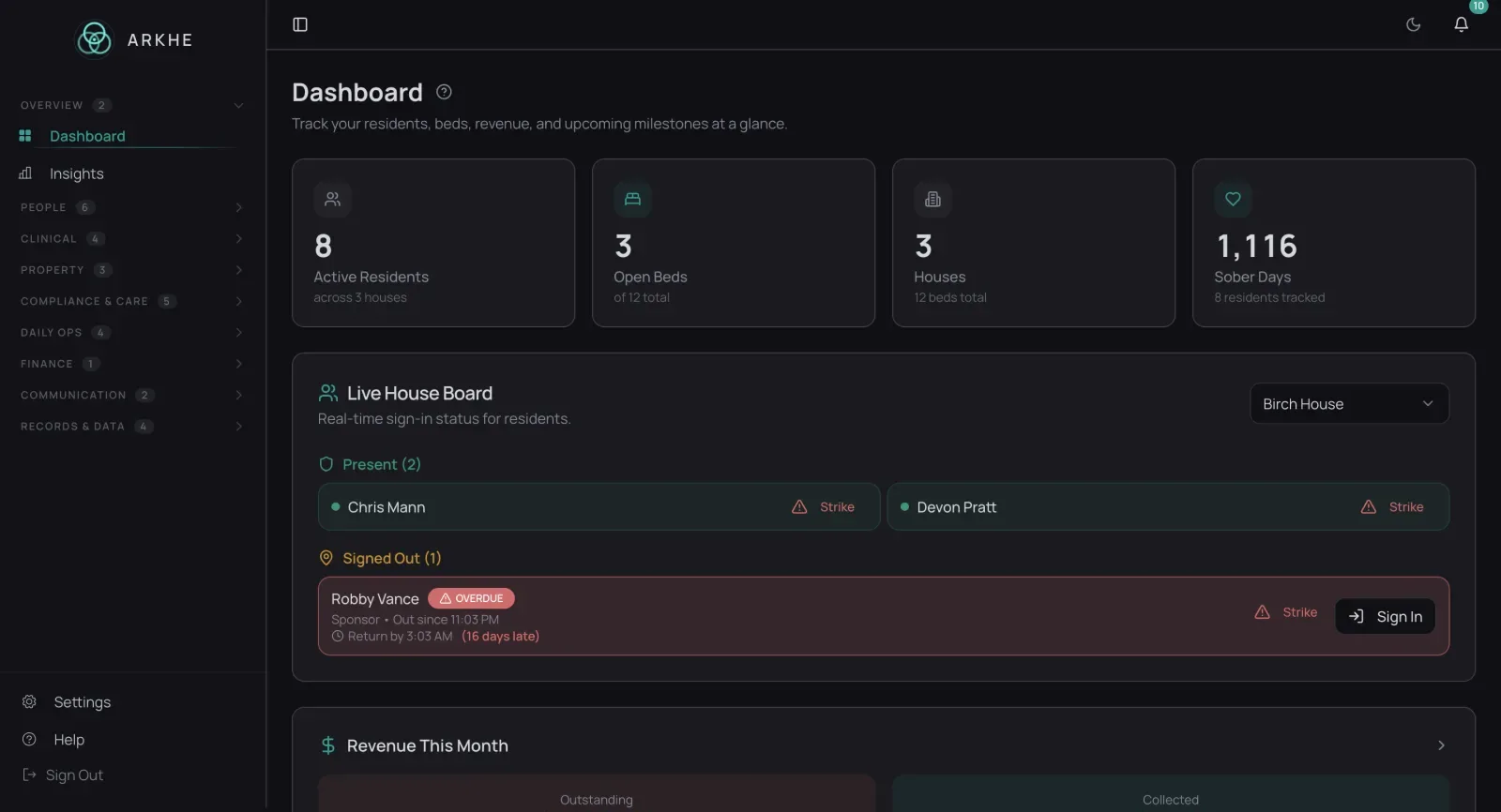
ARKHE’s peer support tools organize service plans, progress notes, and participant records. Peer Support is available now; reimbursement workflows remain in development. Book a demo to review the tools with your team.
Common questions
Can a Certified Peer Specialist bill Pennsylvania Medicaid independently?
Do not assume so. Pennsylvania’s standard applies to enrolled Peer Support Services providers and defines practitioner and provider qualifications. Verify the enrolled billing entity, rendering practitioner, service location, and payer rules before submitting a claim.
Is a Certified Recovery Specialist the same as a Certified Peer Specialist for billing?
No. The credentials and work may overlap in spirit, but they should not be treated as interchangeable billing authorities. This guide addresses Pennsylvania MA Peer Support Services. Confirm the rules for the particular substance-use, mental-health, grant-funded, county, or commercial program you operate.
Does Pennsylvania publish one statewide peer support rate?
Pennsylvania publishes an MA fee schedule, but a BH-MCO’s contracted rate and payment conditions may differ. Confirm the member’s payer and use the current source that governs that claim.
Must a provider enroll with both DHS and the managed-care plan?
If the member’s benefit is administered by a BH-MCO, MA enrollment and the plan’s contracting or credentialing process are separate gates. Confirm both are effective for the service and location before relying on reimbursement.
What should be checked before every claim?
At minimum, check member eligibility and payer, service coverage, authorization or service-plan requirements, provider and practitioner eligibility, documentation, code and units, location and modality, identifiers, and timely filing.
Pennsylvania primary sources
- S1 — Pennsylvania DHS / OMHSAS: OMHSAS-24-05, Peer Support Services Bulletin and standards
- S2 — Pennsylvania DHS: Peer Support Providers
- S3 — Pennsylvania DHS: Enroll as a Medicaid provider
- S4 — Pennsylvania DHS: Medical Assistance fee schedule
- S5 — Pennsylvania DHS: Behavioral HealthChoices managed care organizations
- S6 — Pennsylvania DHS: PROMISe provider resources
- S7 — Pennsylvania DHS: Medical Assistance billing information
Sources and program statements were last verified on July 24, 2026. Rules, payer contracts, codes, rates, and provider requirements can change. Confirm current requirements with Pennsylvania DHS and the responsible payer before delivering or billing services.
Keep exploring